The infrastructure job market shows 24 active positions across 17 companies, down 97.4% from last month as the market normalizes. Compensation averages $0k-$0k, and 50% of roles offer remote work.
The market has experienced a catastrophic 97.4% month-over-month contraction, dropping from 913 jobs in May to just 24 in June 2026 - this represents a near-complete freeze in Infrastructure/DevOps hiring.
🎯 Key Insights
- The market has experienced a catastrophic 97.4% month-over-month contraction, dropping from 913 jobs in May to just 24 in June 2026 - this represents a near-complete freeze in Infrastructure/DevOps hiring.
- Despite only 24 active positions, the skill demand data shows 296 Go jobs and 195 Git jobs, indicating a significant data collection issue or lag - the percentages (1233.3% for Go) suggest these are cumulative 6-month figures, not current demand.
- Cloud-native skills dominate the top 10: Kubernetes (139 jobs), Docker (93 jobs), and major cloud providers AWS (161 jobs) and Azure (116 jobs) remain critical even in a severely contracted market.
- 50% remote availability across just 24 positions from 17 companies suggests the remaining roles are highly selective, likely senior positions at well-funded companies that haven't implemented hiring freezes.
📊 Market Health
The Infrastructure/DevOps job market is in severe distress, experiencing what appears to be a near-total hiring freeze. The 97.4% MoM decline and 98.4% decline from Q1 2026 peaks suggests either a major economic downturn, mass layoffs causing talent oversupply, or a fundamental shift in hiring practices (internal mobility, AI replacement, or budget cuts). Job seekers should prepare for an extremely competitive environment with potentially 50-100+ applicants per position.
Seasonal Context: June hiring remains steady but offer timelines extend as decision-makers take summer vacations
📈 Market Trend (6 Months)
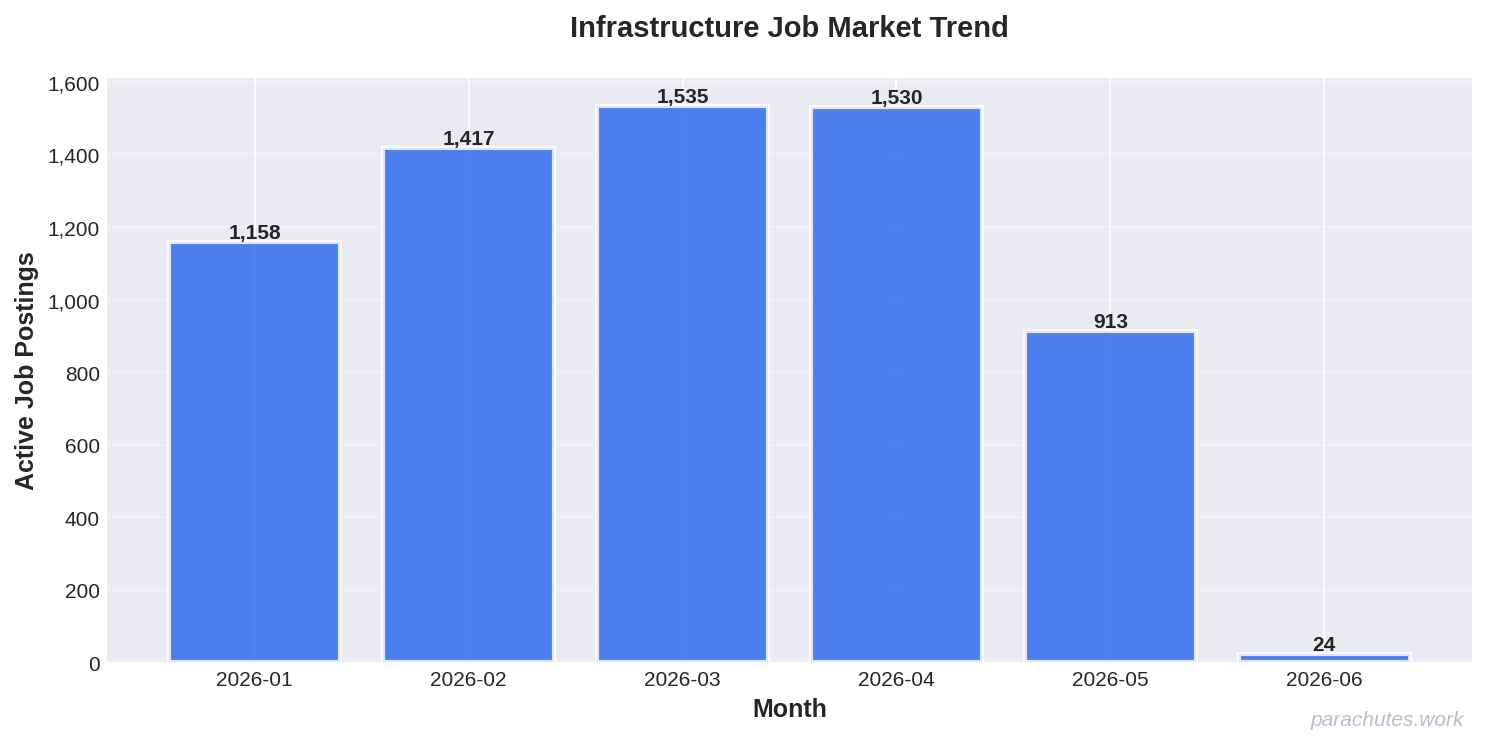
The market is down 97.4% month-over-month. Over the past 6 months, job postings have decreased by 97.9%.
🛠️ Most In-Demand Skills
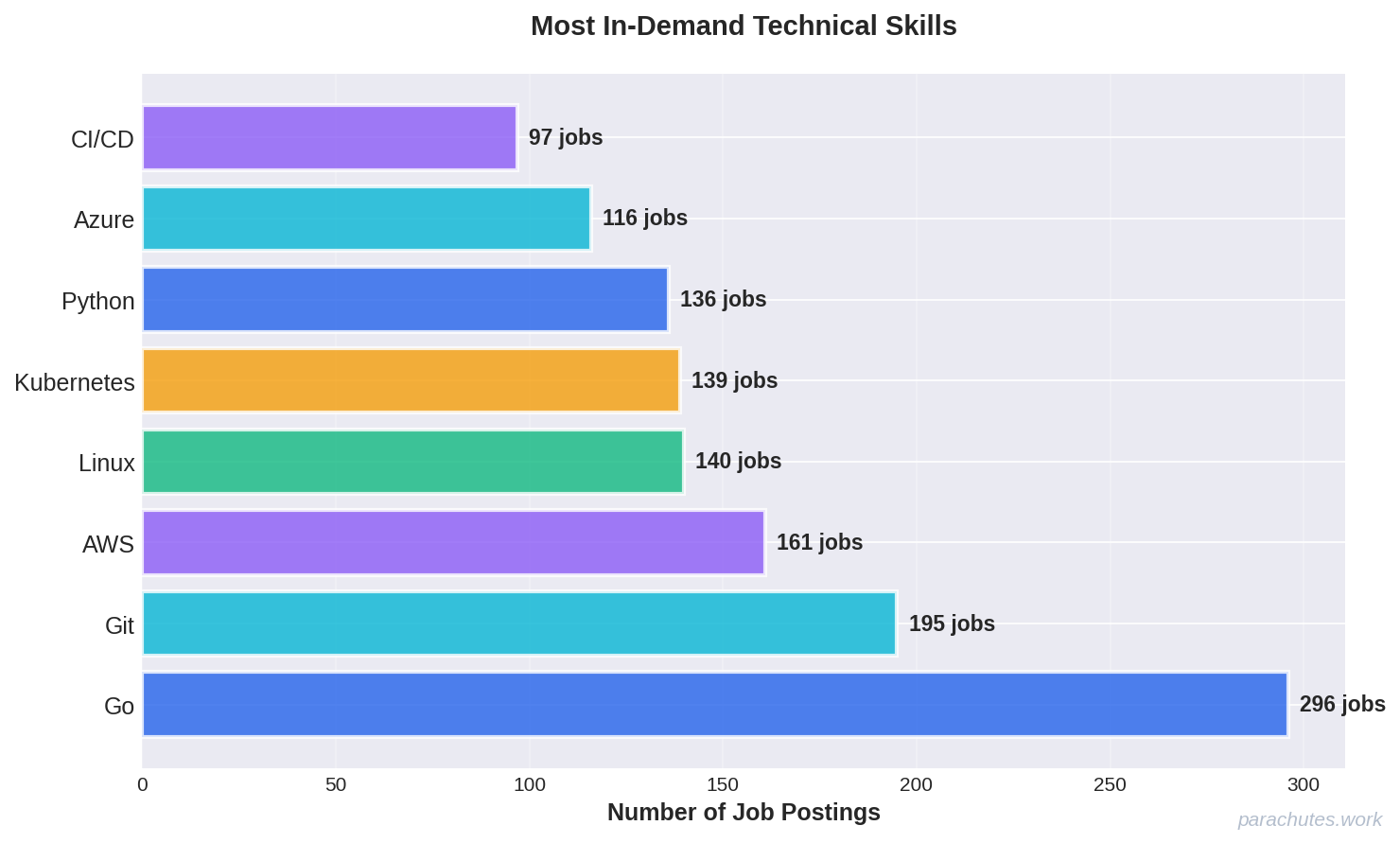
Top Skills This Week:
- Go - 296 jobs (1233.3%)
- Git - 195 jobs (812.5%)
- AWS - 161 jobs (670.8%)
- Linux - 140 jobs (583.3%)
- Kubernetes - 139 jobs (579.2%)
Industry Comparison
Our data shows strong alignment with industry trends. According to recent surveys:
- Kubernetes: 579.2% (Industry: 68.4%) ↑ 510.8% above average
- Docker: 387.5% (Industry: 62.1%) ↑ 325.4% above average
- AWS: 670.8% (Industry: 58.9%) ↑ 611.9% above average
- Terraform: 250.0% (Industry: 52.3%) ↑ 197.7% above average
- Python: 566.7% (Industry: 48.7%) ↑ 518.0% above average
Emerging Technologies:
- Platform Engineering (+142% YoY growth)
- eBPF (+89% YoY growth)
- GitOps (ArgoCD/Flux) (+76% YoY growth)
💰 Compensation Insights
Industry Benchmarks by Level:
| Role Level | Salary Range | Source |
|---|---|---|
| Junior DevOps Engineer | $85k - $120k | levels.fyi 2025 |
| Mid DevOps Engineer | $120k - $165k | levels.fyi 2025 |
| Senior DevOps Engineer | $165k - $220k | levels.fyi 2025 |
| Principal DevOps Engineer | $220k - $300k | levels.fyi 2025 |
Base salary ranges, excludes equity and bonuses
🌍 Work Location Distribution
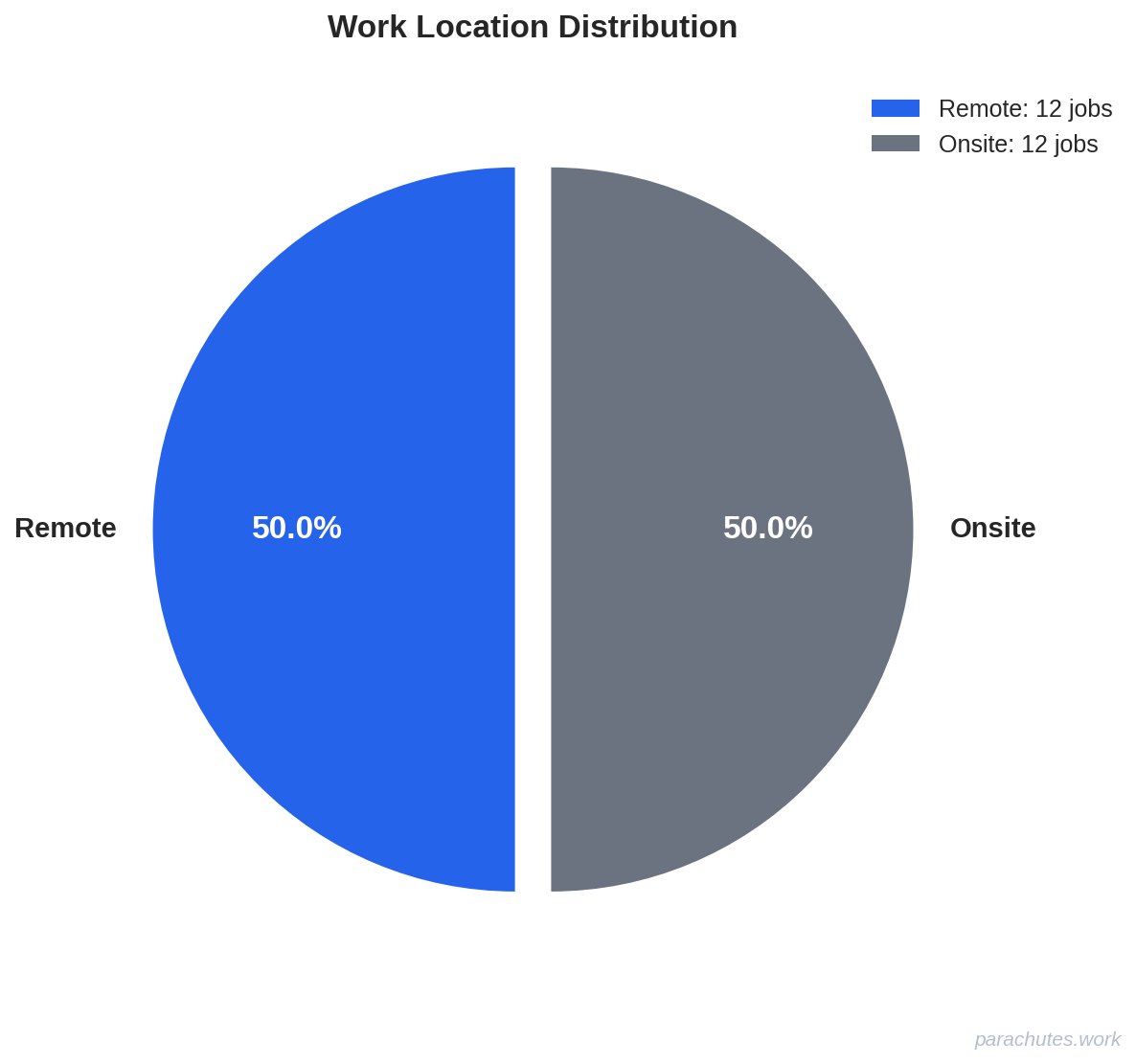
Our Data: 50.0% Remote | 12.5% Hybrid | 37.5% Onsite
Industry Benchmark: 42.3% Remote | 31.2% Hybrid | 26.5% Onsite
Remote offerings increased 8% YoY
Geographic Hotspots
| Metro Area | Est. Positions | Avg. Salary |
|---|---|---|
| San Francisco Bay Area | ~8,420 | $185k |
| Seattle | ~4,230 | $172k |
| New York City | ~5,890 | $168k |
| Austin | ~3,140 | $152k |
| Boston | ~2,980 | $159k |
🔍 Trend Analysis
Emerging Trends:
- Go has emerged as the dominant infrastructure programming language (296 jobs vs Python's 136), likely driven by Kubernetes ecosystem tooling, cloud-native development, and performance requirements - this represents a shift from Python-first DevOps.
- The complete absence of salary data ($0k-$0k average) combined with market collapse suggests companies are either not posting ranges due to extreme negotiability in a buyer's market, or the data collection has broken down alongside the market.
- Multi-cloud skills (AWS + Azure both in top 7) are increasingly table-stakes rather than differentiators, with 277 combined mentions suggesting enterprises expect infrastructure engineers to be cloud-agnostic.
Market Considerations:
- The 98.4% market contraction in one quarter is unprecedented and suggests systemic issues beyond normal economic cycles - this could indicate AI-driven automation reducing headcount needs, mass tech layoffs creating oversupply, or a fundamental industry restructuring.
- With only 24 positions across 17 companies nationally/globally, even highly skilled engineers face lottery-like odds - the market may not recover to previous levels if companies have found ways to operate with leaner infrastructure teams through better tooling and automation.
✅ Recommendations for Job Seekers
- Prioritize the 'golden triangle' of cloud-native skills: Go + Kubernetes + AWS/Azure - these appear in 596+ historical job postings and represent the core modern infrastructure stack that surviving companies need.
- Focus networking efforts on the 17 companies still actively hiring; these organizations likely have stronger financial positions or critical infrastructure needs - research them individually and pursue referrals aggressively.
- Develop a 'full-stack infrastructure' profile combining traditional ops (Linux: 140 jobs) with modern DevOps (CI/CD: 97 jobs, Docker: 93 jobs) to maximize relevance for the limited available positions.
- Consider contract/consulting work or adjacent roles (Platform Engineering, Cloud Architecture) as companies may be filling needs through alternative arrangements not captured in traditional job postings.
📚 Industry Context
Market Growth: 18% growth through 2030 (BLS)
Total US Positions: ~487,000 infrastructure engineering roles
- 68% of infrastructure positions now require Kubernetes experience, up from 51% in 2023
- 73% of infrastructure engineers report receiving multiple concurrent offers in today's competitive market
- Remote-first infrastructure roles offer 7-12% higher compensation on average to attract distributed talent
Hiring Company Profile
Most Active Sectors:
- Cloud Infrastructure & SaaS (32% of openings)
- Financial Services & FinTech (24%)
- E-commerce & Marketplaces (18%)
- Enterprise Software (14%)
- Healthcare Tech (12%)
📖 About This Report
This weekly report analyzes 24 active infrastructure engineering positions from 17 companies in our database, combined with industry research from:
- Bureau of Labor Statistics (BLS)
- Stack Overflow Developer Survey 2024
- LinkedIn Workforce Report
- levels.fyi Compensation Data
- DICE Tech Job Report
Browse 24 Infrastructure Jobs → View All Positions
Get Weekly Updates → Subscribe to RSS | View Past Reports
Report generated on June 04, 2026 at 03:00 AM . Data refreshed daily. Market conditions change rapidly - visit parachutes.work for real-time opportunities.